Understanding Your Birth Chart
The practice of tracing the positions of the Sun, Moon, Mercury, Venus, Mars, Jupiter, Saturn, Uranus, Neptune, and Pluto at the exact moment of your birth—what astrologers call a birth chart—has fascinated people for millennia. In this guide we’ll unravel what each element represents, how the stars influence personality, and why your natal, or birth, chart offers a roadmap for personal growth and self‑awareness. By the end, you’ll have a clear foundation to interpret your own chart or discuss it with a professional.
The Components of a Birth Chart
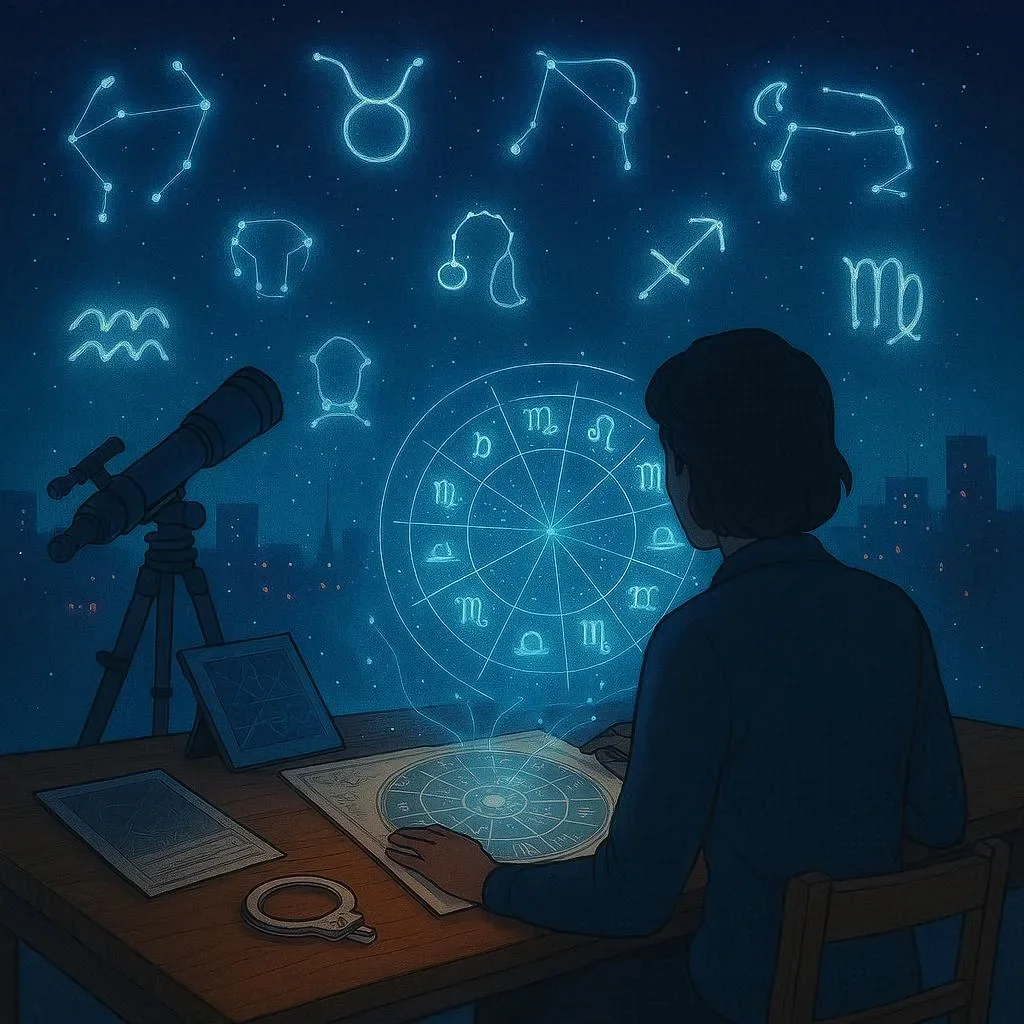
A birth chart is a snapshot of the heavens at the second you are born, anchored to your exact latitude, longitude, date and time. The six main components you’ll encounter are the zodiac signs, the planets, the 12 houses, the aspects, “the ruling planet” and the celestial nodes. Each element behaves like a piece of a puzzle, and only when you place all the pieces together does the full picture emerge. The following quick guide helps you identify each key piece:
- Zodiac Signs – The 12 constellations that the Sun moves through, each bringing distinct energies.
- Planets – Including the Sun and Moon, they represent specific psychic drivers.
- Houses – 12 segments that define life areas such as identity, finances, relationships, etc.
- Aspects – Geometric angles between planets that reveal interactions, support or challenges.
- Nodes – Lunar nodes pointing to past‑life or karmic themes.
- Ruling Planet – Showcasing the sign of the Sun, revealing the overarching influence.
Key Planetary Positions and Their Significance
Each planet carries a distinct personality trait or life theme. Below is a brief descriptor of the archetypal forces you might find in your own chart:
- Sun – Core identity, purpose, and sense of self.
- Moon – Emotions, intuition, and instinctual drives.
- Mercury – Mindset, communication, and analytical skills.
- Venus – Love, aesthetics, and harmony in relationships.
- Mars – Energy, ambition, assertiveness, and courage.
- Jupiter – Growth, optimism, expansion, and luck.
- Saturn – Discipline, responsibility, challenges, and timing.
- Uranus – Innovation, rebellion, sudden change, and freedom.
- Neptune – Spirituality, dreams, imagination, and potential for deception.
- Pluto – Transformation, power, survival, and unconscious cycles.
You can explore how these symbols interplay on detailed charts here: Birth Chart Definition, or for a quick rundown, see Astrology Terms for definitions.
How Houses Shape Your Life Path
Houses are dynamic quadrants that map each planet’s energy onto concrete life areas. The first sign signifying your Self is the 1st house; your finances live in the 2nd house; growth takes place in the 5th house. The planetary placement within a house modulates how that energy is expressed. For instance, if Mars sits in the 4th house, you may feel a physical urge to protect your home or family. Below is a quick reference guide for each house’s territory:
- 1st – Identity, physical appearance.
- 2nd – Money, values, security.
- 3rd – Communication, siblings, learning.
- 4th – Home, roots, family dynamics.
- 5th – Creativity, love affairs, children.
- 6th – Work, health, service.
- 7th – Partnerships, marriage, legal contracts.
- 8th – Intimacy, transformation, shared resources.
- 9th – Philosophy, travel, higher learning.
- 10th – Career, reputation, public image.
- 11th – Social networks, aspirations, group involvement.
- 12th – Subconscious, hidden karma, self‑sacrifice.
Interpreting Aspects for Personal Insight
Aspects are the angular relationships between planets, calculated by dividing the sky into 360°, and reveal how planetary energies coexist. A conjunction (0°) represents a powerful blend, while a square (90°) conveys tension that can catalyze growth. The most frequently cited aspects include:
- Conjunction – Forces merge, creating intensity.
- Opposition – Duality, challenge, balance.
- Trine – Effortless flow, ease, talent.
- Square – Pressure, urgency, opportunity to transform.
- Sextile – Potential, collaboration, subtle support.
When interpreting aspects, consider both the planets involved and the houses they occupy. Some poster faults are common: overinterpreting single planetary placements without context or ignoring the house framework. A balanced approach, combining symbolism with placement, leads to the most accurate reading. Resources like NASA’s NASA Space Agency or National Geographic Astronomy can help you understand celestial mechanics behind the chart.
Practical Steps to Read Your Birth Chart
1. Generate your chart using an online tool (many reputable sites provide instant reading).
2. Locate your Sun sign – This is the cornerstone of personality.
3. Identify planetary positions – Take note of the signs and houses each planet falls into.
4. Analyze major aspects – Look for conjunctions, squares, trines, and oppositions between key planets.
5. Reflect on patterns – Consider how planetary energies reflect your life challenges and strengths.
6. Seek a professional if needed – A certified astrologer can expand the reading and address complex themes.
Final Thoughts: Your Birth Chart as a Living Map
Your birth chart is not a static prophecy but a dynamic map, illuminating your inherent potentials and pitfalls. By familiarizing yourself with the planets, houses, and aspects, you unlock a deeper understanding of your chosen path and future opportunities. Whether you are drawn to personal growth or simply curious about astrology, use this knowledge as a compass—revisit your chart during major life transitions and interpret the subtle shifts that guide you forward. Now that you have the foundational map, the next step is the most exciting: apply these insights to your everyday decisions and watch your life narrative unfold with clarity and authenticity.